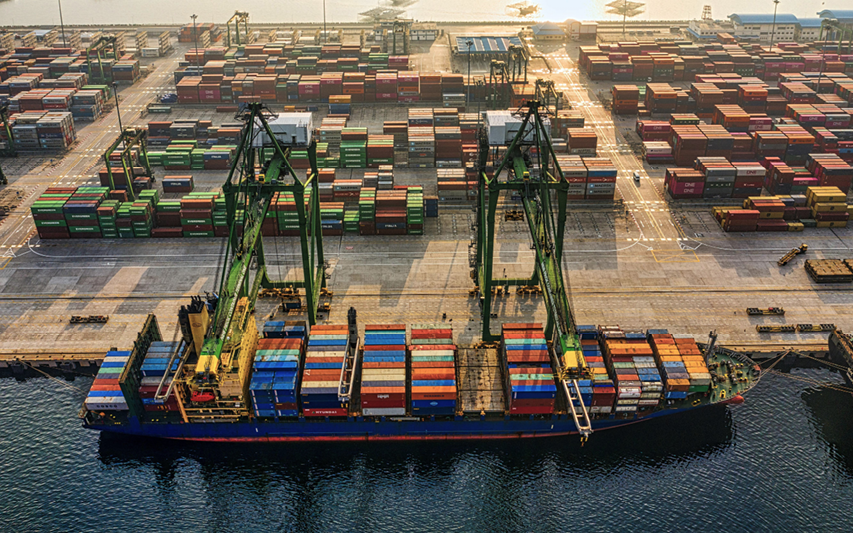
In this case, which first came to the attention of the judicial authorities in 2013, Vincent Bolloré and two former executives of the Bolloré Group – Gilles Alix and Jean-Philippe Dorent – are referred to the Criminal Court for alleged corruption charges in connection with the granting of the Lomé port concession in Togo. The trial is scheduled to take place in December 2026.
The allegations relate to the period 2009–2010. The communications subsidiary Havas, controlled at the time by the Bolloré Group, is alleged to have provided electoral consultancy services to Faure Gnassingbé, a candidate for re-election as President of Togo, at significantly below market rates. In return, the Bolloré Group would have obtained favourable terms for the management of the port of Lomé via Bolloré Africa Logistics.
Sherpa and Anticor, civil parties since 2022 to fight corruption
In 2022, whilst proceedings were ongoing, the organisations Sherpa and Anticor joined the case as civil parties. Their shared aim was to highlight the importance of public debate on transnational corruption and to ensure that victims are recognised in such proceedings, particularly citizens whose democratic and economic rights have been compromised.
After numerous attempts by Vincent Bolloré to avoid a public trial, the persistance of anti-corruption organisations has paid off: a trial will be held in December 2026.
Negotiated justice at the heart of the case
In February 2021, the Bolloré SE Group entered into a Judicial Convention of Public Interest (know as a “CJIP” or “convention judiciaire d’intérêt public” in French) with the French National Financial Prosecutor’s Office for the same allegations, and agreed to pay a fine of €12 million, thereby acknowledging its responsibility for corrupt practices in Togo and Guinea.
Following this “CJIP”, Vincent Bolloré and two other executives of Bolloré SE were offered an alternative to a public trial: a plea bargain (“comparution sur reconnaissance préalable de culpabilité” or “CRPC” in French). The Paris Criminal Court refused to approve this procedure, ruling that the offences were too serious and required a public trial.
A long-awaited trial to establish liability and obtain reparation
Sherpa and Anticor believe that this trial will shed light on the mechanisms of economic interference employed by certain multinational companies in fragile political contexts, and will examine the extent to which the law can sanction such strategies of influence.
Finally, the organisations hope that this trial will establish individual accountability, recognise the concrete impact of these practices on the Togolese people and, in particular, pave the way for appropriate forms of reparation, whether symbolic, institutional or material.
Release from :
Sherpa and Anticor.
For more information : presse@asso-sherpa.org.
